Tuesday, 12 February 2019

Artist Research 3

Hélène Binet

An interesting photographer - Hélène Binet (b. 1959) is a photographyer famed for her architectural photography, taking pieces which show modern or post-modern architectural feats. She is said to expose architecture's achievements, strength, pathos and fragility according to architect Daniel Libeskind.


The first photo sees a curved roof under a cloudy sky. The photography manages to hit all of the tonal range from Ansel Adams' zone system, as well as getting a good composition where the photo is almost around half and half, with an artificial horizon made by the roof. Due to there not being much behind the photos other then architectural feats, I don't believe there to be much meaning inside this piece.
Related image


This photo sees a modern architectural building or statue in the middle of a plaza. It's very interesting not only as a creation but also as a photograph, as it looks almost out-of-this-world. Especially with the scarce office blocks in the background, it looks like the sole building was transported from the far future to today. Furthermore, it hits the tonal range spot-on as well as giving a central focal point for the viewer to look at. 
Image result for helene binet


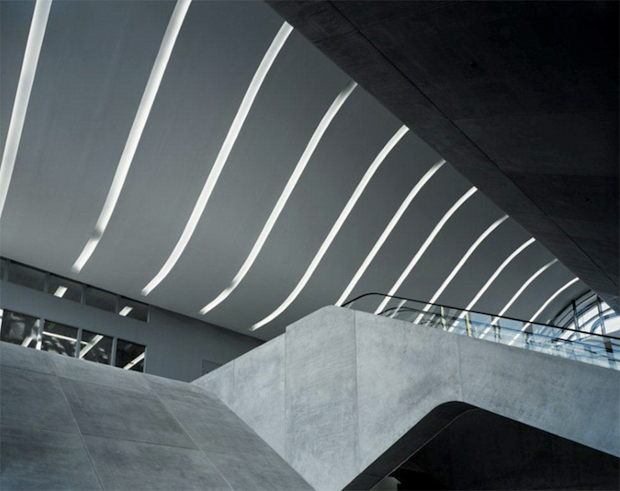
As a closing photo we have the interior of the Rabat Grand Theatre, which is quite a good place to get photos from due to it's ultra-modern look. Something different however to the previous photos, as it uses, although muted, colours which give the feeling of a cold and official place. The temperature of the photo can be clearly told, as well as it having a variety of tones. It also takes a lot of curves from the roof, escalators and windows on the far right. It's a very intriguing piece.
Image result for helene binet


To conclude I believe this will be one of my favourite shoots to do, as it not only takes architecture but it also focuses on the tone of images and the attempt at trying to find ambiguous images which make the viewer really think (even if these ones aren't extremely ambiguous).

Thursday, 7 February 2019

Artist Research 2

Vivian Maier

An artist who differs from the norm of curves and circles, Maier takes photos of individuals in different areas of cities which contain said curves in different places of the images. Maier (b. feb 1926 - apr 2009) took photos along American streets in bustling cities, specifically in the Illinois area. The vast majority of her photos never actually ended up being published funnily enough, although eventually people had found the photos and decided to publish them with the intention of showing the street photography.


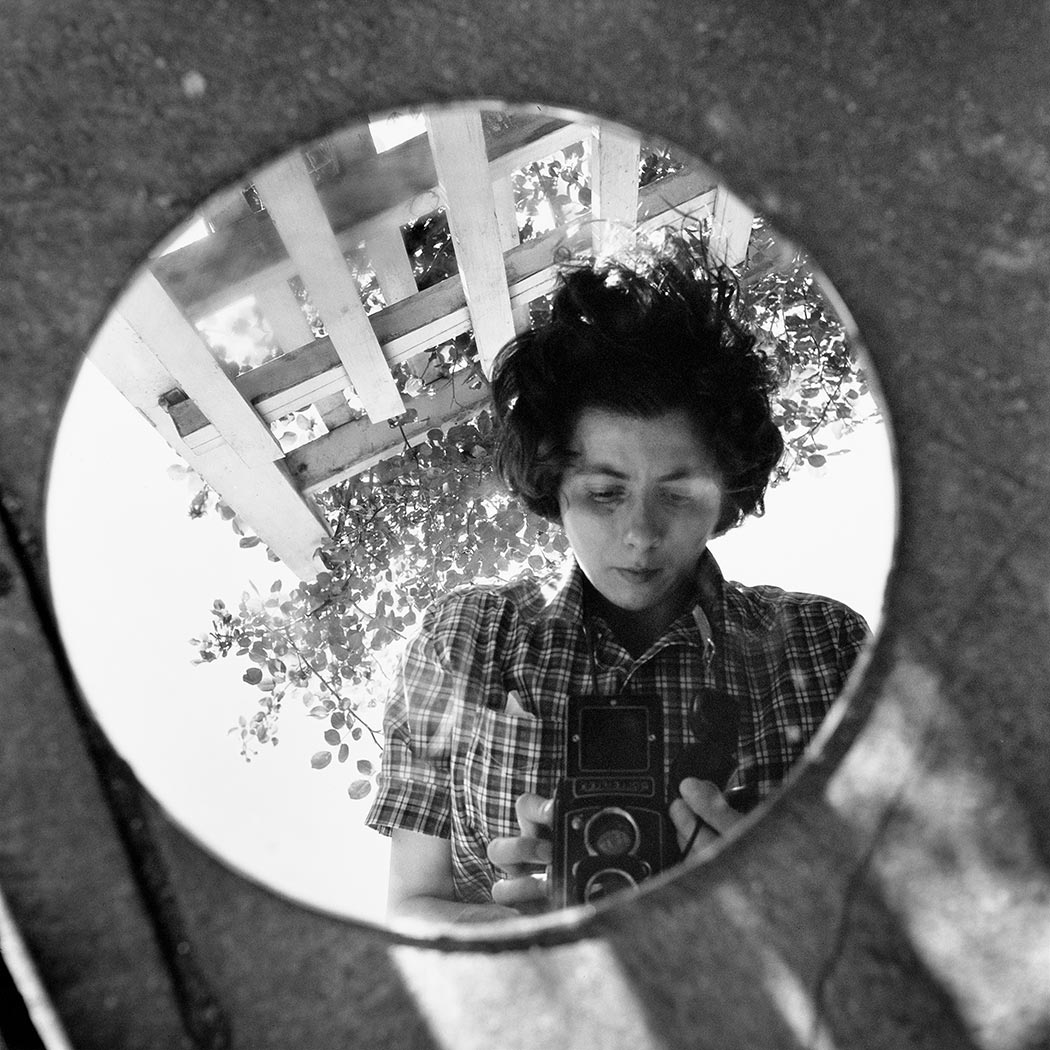
The first photo shows quite an interesting piece of Maier taking a different perspective of street photography, taking a photo from a mirror on the street floor, to reflect an image of both her and the building. Looking deeper into the photo it could also be an abstract piece as if it's a window instead of a mirror, and shes looking down under the street into a rather abstract view. Furthermore, the addition of her in the photo adds character to the photography, and personality.


Image result for Vivian Maier curves and circles


The penultimate photo I'm analysing is of a man in front of an old architectural piece, looking ahead of the camera as if he's preoccupied. This could signify how the man, who seems to be quite young, has had to mature very fast in the era he was living in. The 60s was a time of war, stress and fear which could be ingrained in this photo. Furthermore, the facial expression of the man shows that he may be in deep thought about something, as if he's having to deal with significant issues. 


Image result for Vivian Maier


Finally, we see a very famous photo of a woman standing outside of a sort of museum (pretty sure it's the one in New York City), looking very vacant and occupied in thought, similar to the previous. Her photography might be partly based off of the issues of days gone, from the cold war and from poverty. The issues also reminisce with us today - war looming over us, and poverty striking many innocent people. The photo however shows this woman to be of high stature and wealth, from her dress attire. She however still seems depressed or concerned in this time, which could show how the stress and issues from then impacted everybody.


Image result for Vivian Maier


In conclusion, her photos definitely fit the genre of curves and circles (from the architecture and reflections in the photos), but also have a deeper meaning found in the photos, which can be interpreted depending on the person. Taking photos based on her work would be positive not only for the exam brief, but also to bring a new view into life in 2019.

Artist Research 1

Research and Preparation for the Exam

Josef Sudek

Josef Sudek, b. 1896-1976, was a Czech photographer based around highly exposed, black and white photography. He began taking photos after fighting in World War I and losing a limb. His photos reminisce of dark and drizzly days around early autumn, with a quiet atmosphere to them. However, there is a lot to gain from the images taken as they are quite ambiguous in their composition.
Image result for josef sudek egg


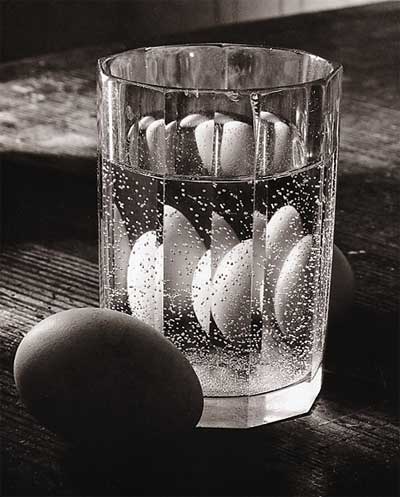
The photos show a variety of ideas inside them, with great visual quality and composition. The first photo finds two eggs between a glass, creating an interesting reflection effect along with the haziness of the bubbles in the water. It is quite interesting because it could be connoting that there are alternate views to ideas - the egg in front being the direct view while the reflection being the separate, more interesting view. However this view is obviously harder to get to. While a stretch, it could signify that with effort, you can achieve better things. Rather than settling for the direct option and taking the path of least resistance, you take a detour and try to improve what you've got already. The contrast on the photo is quite interesting as it creates a lack of exposure on the egg, and makes a very omnipotent shadow over a majority of the photo. It is effective in making the photo match the correct tones for a photo, with sharp lights, calm mid-tones and very significant darks.
Next we have a small view through a window into an overgrown garden. The condensation on the glass is one of Sudek's more famous works, where he takes a photo through a window or of something in front of it and vapour condensed on the glass to create a blur of the outside, or a change in the composition. This specific photo pictures what seems to be his garden after a cold morning. The photo doesn't actually reveal much, and is quite enigmatic in how most of the photo is a mystery. It could be that it's linking to how people should look through windows into new opportunities, and see if it is worth it. 


Image result for josef sudek


Finally, there is an intriguing photograph of a flower in front of the very same window from the previous shot.The flower is accompanied by what seems to be some sort of old fruit, as well as an assortment of miscellaneous items and books on the right. In front of the items is of course the cold window, which has built up condensation from the temperature difference between the areas. Looking deeper into the reasoning behind the photo, it could be reminiscing back to the feeling of home, and the civility and personal feeling of being at home. The items in front of the window might link to what Sudek's home might look like, and gives a sense of normality for him and many others. It could link also to how he spent time in the military, where you very commonly feel homesick and adore the idea of being back at home with family.

Image result for josef sudek


In a nutshell, his photography is very interesting and abstract giving a lot of areas for interpretation in his works. I believe it will be very interesting or even exciting to take photos based around his art. Especially his reflection pieces.

Moodboards of Initial Ideas


In order of;
Josef Sudek, Vivian Maier, Yayoi Kusama, Yasujiro Ozu, Walker Evans, Irving Penn

Tuesday, 5 February 2019

Exam Paper Discussion

Considering my options and finding a good artist to research

Possible Ideas
Circles and Curves: 01
"Many photographers and artists have used circles or curves to produce imaginative and powerful work. Josef Sudek photographed shells, egg,s glasses and balls chosen for their distinctive shapes and forms, in his series of still-life arrangements. Round hats, mirrors and lenses act as frames or foal points in the portraits of Vivian Maier. Yayoi Kusama has used complex and intense patterns of dots and spots to produce startling installations. Produce your own response, making reference to appropriate work by others."

Settings and Location: 03
"The locations chosen by numerous filmmakers and photographers have often proved critical in creating mood or establishing meaning. The director Yasujiro Ozu used the interiors of Japanese homes to reflect the formality of domestic and family relationships that interested him. When photographing objects, Walker Evans emphasised the context of the room or street in which they were located. Irving Penn severely limited the space available for his models when creating his Corner Portraits series. Produce your own response, making reference to appropriate work by others."

Shops and Shopping: 05
"Shops, shopping, buying and selling, in high streets and markets, can offer dynamic and engaging opportunities for photographers and artists. Robert Adams observed customers, shelves of goods and shopping trolleys in his project 'What We Bought'. Jim Dow's 'Corner Shops Of Britain' recorded the distinct colours of the interiors and exteriors of traditional family businesses. The Tate's Prunella Clough archive shows how the artist used photographs of multiple and repeated objects in shop window-displays as inspiration for her paintings. Produce your own response, making reference to appropriate work by others."

Project 01
For Project 01, I have a very wide area which I can research. I feel like I would excel with Josef Sudek, as he takes a very muted style to the table. Furthermore, after a quick search over the internet I can find a plethora of items which match my photography style. I believe I could do quite well in this project due to its ambiguity and flexible guidelines. 

Project 03
Project 03 is a bit of a confusing one for me, as I feel like I'd be able to do it, however it also feels a bit too out there for the style I am going for. The project would focus on setting a scene with a multitude of variables changing how the piece might work. In the project, it's described as if we take photos of specific places, or scenes, like how Ozu has taken photos of family homes in Asia. This could be quite a good way of showing the reality of family life behind closed doors. The peaks and lows, laughter and heated debate. Or it could show stereotypes and the disproportionate reality of arguments and debates between different ethnicities, cultures, genders, sexualities, etc. 
Project 05
The third and final option I've decided could potentially work is Shops and Shopping. As shown, it is portraying it as if we are supposed to go into shops and take photos of the interior, or get photos of close outside said shop. I believe this could be a very efficient way of portraying British culture through corner shops, or of course consumer culture via larger superstores, like Tesco or Asda.

In summary, I believe the most likely one would be Circles and Curves, a.k.a Project 01. It matches the criteria of what I will most likely excel in, due to how I am able to capture scenes where there is a significant amount of muted imagery (other than Yayoi Kusama) which matches the photography I'll be able to take. In instances of 03 and 05, they are both around equal potential in joint 2nd choice for photos. I'm not quite sure on either of them at the moment, but am able to switch to them if need be.

Definitions
The exam paper states we must choose one of the five options given, which were Curves, Writing, Settings, Sky, and Shopping. Each gives a moderate description of the choice, with three artists in each for researching.